
Profile / Dr Aditi Desai
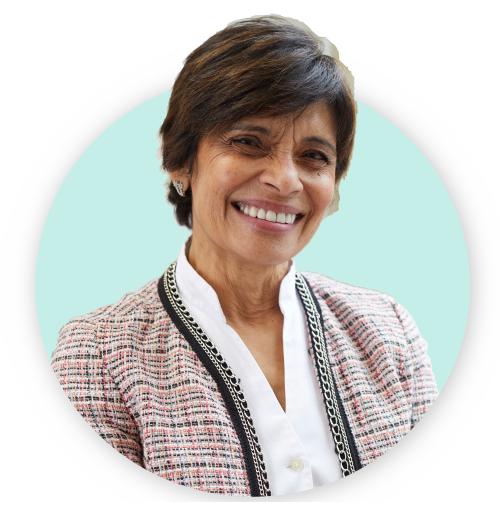
Dr Aditi Desai is the President of the British Society of Dental Sleep Medicine (BSDSM) and an expert dental surgeon with a special interest in sleep medicine based in London. She treats sleep disorders, such as sleep apnoea and snoring and her practice is dedicated to the dental management of these conditions. She is President of the British Society of Dental Sleep Medicine (BSDSM)
Locations
The Shard, 32 St Thomas Street
SE1 9BS - London
-
Location & Availability
HCA at the Shard
HCA’s Outpatient centre at The Shard, rated outstanding by the Care Quality Commission, has been designed to bring world-class private healthcare to people in London. It provides easy access to exceptional facilities and top consultants in the medical field.
- Contact: 0207 234 2009
- Address: HCA Healthcare UK Outpatients & Diagnostics Centre, The Shard, St Thomas Street, London SE1 9BS
- Hours: Open from 8am to 8pm weekdays
-
Availability:
- 08:00
- 10:00
- 12:00
- 14:00
- 16:00
- 18:00
- 20:00
Mon Tue Wed Thu Fri Sat Sun
-
Conditions treated
Sleep Diagnosis Service
What is dental sleep medicine?
Dental sleep medicine is an area of special interest within dentistry where certified dentists are trained to use oral appliance therapy (OAT) to treat sleep disordered breathing (SDB). This includes the treatment of snoring and obstructive sleep apnoea (OSA). Dentists work alongside a team of medical sleep specialists and other healthcare professionals in order to optimise treatment options for the individual patient. Dentists can be the first contact for a patient seeking help for snoring. Included in this area of special interest is Sleep Bruxism (SB) or nighttime grinding of teeth, temporomandibular joint dysfunction (TMD) and craniofacial pain (CFP).
How do oral appliances work?
Gold standard treatment for SDB is Continuous Positive Airway Pressure (CPAP), which is a face or nasal mask connected to a pump that produces a positive flow of air to keep the airway open. A high percentage of patients find it difficult to tolerate or comply with this therapy hence custom-made oral devices are an alternative treatment option for them. These oral devices are the treatment of choice for snorers and mild apnoeics in any case.
A certified dentist fits the patient with an intra-oral device, or mandibular repositioning device (MRD), over the teeth. It pulls the lower jaw forward to create additional room at the back of the throat for the tongue and loose soft tissue, which usually causes airway obstructions and stops the patient from breathing normally.
For sleep bruxism, the dentist can also fit an MRD or a mouth-guard to manage the patient’s clenching or grinding of their teeth during their sleep. It is thought that as many as 25% of SDB patients have SB and equal numbers of SB patients may have SDB, which makes it essential for comprehensive clinical consultation prior to treatment of either or both. There are many different types of intra-oral appliances, which are provided depending on the individual patient case. One device does not necessarily fit all patients. Some MRDs lock the mandible in position while others allow lateral and vertical mandibular movement.
How do I get diagnosed with obstructive sleep apnoea?
Diagnosis of OSA can be made by a medical professional only. Certified dentists can screen and assess in order to establish risk and refer on if required for formal diagnosis. If a patient thinks that they have OSA they can visit their dentist or GP and appropriate referrals will be made.
The sleep specialists at the centre will arrange for the patient to be assessed with either an overnight sleep study in a hospital or give the patient equipment, including a breathing sensor, heart rate sensors and oxygen sensor, to monitor their sleep at home. This will be useful in reaching a definitive diagnosis.
SnoringWhat is snoring?
Snoring and obstructive sleep apnoea are disorders characterised by temporary upper airway occlusion at the pharynx level during sleep. This causes problems with sleep, fatigue and breathing, and other related problems.
Symptoms of snoring:
As well as snoring, in more severe cases breathing may stop (sleep apnoea) for more than 10 seconds, resulting in episodes of sleep disturbances throughout the night. These episodes cause oxygen deficiency in the brain, which increases the risk of cardiovascular problems, diabetes or stroke. The affected person may also suffer from drowsiness, general tiredness or depression, and may suffer from impaired concentration and professional and personal performance.
What causes snoring?
The most common causes of snoring and sleep apnoea are obesity, nasal obstruction (polyps, deviated septum), an elongated soft palate, and hypothyroidism, among others. The common denominator in all situations is that there is a permanent or functional narrowing, which can have its origin at various levels of the upper airway. This produces an intense vibration on the walls of the pharynx, which transforms into the sound we perceive as snoring.
Can snoring be prevented?
It is difficult to prevent snoring but steps can be taken to improve it. For example:
- Snoring is made worse by sleeping on your back, so avoid sleeping in this position.
- Dry air may irritate and inflame the nasal mucosa. Placing a humidifier in the room may be helpful.
- Some foods contain allergens that provoke reactions and may cause a narrowing of the airways. These should be identified in order to check for possible allergies.
- Avoid alcoholic beverages in the evening, as alcohol relaxes the muscles of the pharynx, causing the air to vibrate as it passes, which then results in snoring.
- Certain sleep medications worsen snoring and the severity of sleep apnoea.
- Smoking dries and inflames the mucous membranes and is therefore strongly discouraged.
- It may be helpful to raise the headboard of your bed or use more than one pillow.
- Surgery may be an alternative, especially in cases of anatomical anomalies.
How can snoring be treated?
Treatment can be based on weight loss, changing lifestyle habits, and giving up smoking and drinking. You can also use a nasal mask that provides air pressure controlled by a mechanical device (CPAP), or you can have surgery.
Surgery may be helpful for anatomical abnormalities such as a deviated nasal septum or thickening of the uvula and soft palate. Non-invasive surgical techniques performed under local anaesthetic have been used for years now and they offer rapid postoperative recovery. Another non-invasive alternative is a mandibular advancement device. This is a kind of "dental sleeve" that you wear when sleeping. It moves the lower jaw forward of the upper jaw, thus widening the retrolingual area. It helps prevent snoring and sleep apnoea, is simple to use and has an easy adaptation process.
Sleep Apnoea
Sleep apnoea is the interruption of breathing that occurs moments after falling asleep, preceded by a period of loud snoring for at least 10 seconds. If this process is repeated 5 times for each hour of sleep it is called Obstructive Sleep Apnoea Syndrome. Obstruction of breathing causes a decrease in oxygen levels in the body that makes it difficult for the person to have a restful sleep and causes tiredness the next morning. In addition, the persistence of this lack of oxygen could lead to pulmonary hypertension and future right-sided heart failure or myocarditis, so it is important to detect it early and perform relevant tests for a safe diagnosis. A sleep study is carried out to establish treatment that includes the change of some lifestyle habits (diet, abstention from alcohol, postural changes) and the prescription of a CPAP machine, which generates air pressure via a nasal mask. This stops respiratory obstruction, preventing snoring and favouring restful sleep. In some cases, surgery may be required if there are any airway scars or when the mask is not effective.
Mandibular Advancement DevicesWhat is a mandibular advancement device?
A mandibular advancement device (MAD) is a gadget that is inserted into the mouth before going to sleep. It holds the lower jaw (mandible) and tongue forward, away from the back of the throat, thus holding the upper airway open. Most MADs are moulded to fit over the patient’s teeth, with the upper jaw acting as a fixed platform to anchor the device as it holds the lower jaw forward. Most models of mandibular advancement device fit entirely within the mouth.
What is a mandibular advancement device for?
The main purpose of a mandibular advancement device is to prevent snoring.
There are many reasons why people snore, and while some patients will not be bothered by it, others can find it impacts their lives or their partner’s lives significantly. If your snoring is causing problems, your doctor, dentist, or a sleep specialist could help in identifying the source of the snoring and taking appropriate measures.
If the cause of your snoring is restriction of the airway at the back of your throat by the surrounding tissue or the tongue, a mandibular advancement device may be recommended, as it holds the tongue forward, opening the airway and reducing or eliminating snoring.
What do mandibular advancement devices involve?
There are different types of mandibular advancement device. Broadly speaking, there are three categories:
- “Boil and bite” – these can be bought and moulded by the patient by heating and softening the resin or silicon in hot water and biting into it as it cools, making it set in a mould of the patient’s bite.
- Semi-custom – the patient makes a mould of their teeth, which is then sent away for a custom-made, good-quality device to be made from it.
- Custom – some dentists and sleep specialists offer custom-made MADs, which are refined and fitted specifically for each individual patient, delivering the perfect fit.
Many modern mandibular advancement devices are adjustable to a degree.
It is important to keep MADs clean, which can be achieved by placing them in hot water and brushing them in the way we brush our teeth.
Mandibular advancement device side effects
Mandibular advancement devices may cause a little discomfort, particularly at first. The teeth may ache a little and the jaw may be stiff. However, pain is highly unusual. If wearing the device is painful, you should stop immediately and consult your doctor or dentist. Other side effects may include hyper salivation, mouth dryness and teeth moving out of alignment.
Alternatives to a mandibular advancement device
Mandibular advancement devices don’t work for everyone – in fact, patients with dentures will be unable to use one, as there is nowhere to anchor the device.
Tongue stabilising devices (TSDs) are an alternative, while preventative measures such as losing weight, reducing alcohol intake, and staying hydrated can also help the patient to stop snoring.
Temporomandibular joint disorderTemporomandibular joint disorder (TMJ)
The temporomandibular joint (TMJ) allows us to open and close the mouth to chew, bite, speak, breathe, yawn, or make other similar movements. This joint connects the bones of the skull and face, with one on each side of the head. It performs three types of movement: up and down, forward, backward and side to side. Dental malocclusion (misalignment of teeth when the jaw closes), orthodontic appliances, stress and bad habits such as clenching the teeth or biting objects can alter the function of the temporomandibular joint. This syndrome can cause pain in the jaw, ears, head, neck, back, plus trouble chewing. TMJ treatment is aimed at addressing the causes that have caused the disorder and improving symptoms, and may include physical therapy, exercise, medication, relaxation techniques, mouth guards and surgery, although this is rare.
-
Qualifications & training
About Aditi Desai
Dr Aditi Desai: President of the British Society of Dental Sleep Medicine (BSDSM)
Dr Aditi Desai is the President of the British Society of Dental Sleep Medicine and an expert dental surgeon with a special interest in sleep medicine based in London. She treats sleep disorders, such as sleep apnoea and snoring and her practice is dedicated to the dental management of these conditions. She is President of the British Society of Dental Sleep Medicine (BSDSM).
Dr Desai has a wealth of experience, having practised as a restorative dentist for over 40 years. This includes 13-years as an in-house dentist for the BBC, at Broadcasting House in London. She graduated with distinction from the University of Wales in 1977, later gaining a Master of Science in Conservative Dentistry from the University of London. Her qualifications and experience have given her a level of expertise in her field that, combined with her passion for dentistry and sleep medicine, has led her to serve on the Odontological Council and Sleep Medicine Council of the Royal Society of Medicine (RSM), and is on the Board for the Association for Respiratory Technology and Physiology, UK (ARTP)
Dr Desai practices at several locations, including London Bridge Hospital, HCA at The Shard, and a private multi-specialty practice in Harley Street. Her work has been widely published and she lectures on the subject of dental sleep medicine both in the UK and abroad. She has been an invited speaker at the the Royal Society of Medicine (RSM), the Royal College of Surgeons of England, the British Sleep Society, the British Dental Association and many other organisations.
Dr Aditi Desai set up Global Sleep Solutions as a service for patients looking for help with their sleep problems. Working with a team of like minded medical professionals, Dr Desai aims to raise awareness, provide education and facilitate access to treatment for patients with snoring, sleep apnoea and other sleep disorders.
Professional PostsProfessional Posts
- Consultant Dental Surgeon, The London Bridge Hospital (2014 - present)
- Dental Surgeon with Special Interest, 76 Harley Street (2009 - present)
- Dental Surgeon with Special Interest, Boston House Dental Clinic (2014 - present)
- Principal Dentist, Broadcasting House Dental Practice (1996 – 2009)
- Part Time Clinical Teacher, King's College London, Dental Institute (2003 – 2014)
Education- MSc Con Dent Lond (2004)
- BDS Wales (1977)
- Accreditation from the European Academy of Dental Sleep Medicine (EADSM)
Memberships- Odontological Council and Sleep Medicine Council of the Royal Society of Medicine (RSM)
- President of BSDSM
- Board member of The Association for Respiratory Technology and Physiology (UK)
- Member of British Dental Association (BDA)
- Testimonials
Back to topDoctify Reviews
Aditi Desai - Doctify Reviews
Clearly an expert in her field. Excellent treatment and follow up.
Verified Patient - 18-03-2020
I’ve found meeting and working towards a solution with Dr Desai to be a great experience. Dr Desai was very patient when taking me through my device options and we settled on a bespoke device which is comfortable and is working well for me.
Verified Patient - 12-03-2020
Dr Desai combines experience and knowledge with a sympathetic approach to patient care that is of the highest standard.
Verified Patient - 24-01-2020
Overall excellence in every way possible. Most impressed
Verified Patient - 22-01-2020
Highly knowledgeable with decades of experience, Dr Desai is a first class consultant and the leader in her field. I have been very happy with every aspect of Dr Desai’s work from diagnosis all the way through to treatment and aftercare.
Verified Patient - 18-01-2020
Prescribed me a device that stops my sleep apnoea and then a better one once it was available. Very helpful, friendly, available out of surgery hours to help it bed in. Cannot speak highly enough of her!
Verified Patient - 17-01-2020
Additional details is extremely knowledgeable and supportive and with her help my snoring problem has been dealt with.
Verified Patient - 17-01-2020
I have been going to see Dr Desai for three years and have always found her advice and support to be wholly holistic, very well informed and incredibly effective. Her advice and support has been invaluable and I would wholeheartedly recommend her.
Verified Patient - 16-01-2020
I went to see Dr Desai because I was suffering from disturbed sleep, waking in the night gasping for breath. That’s the layman’s description, the medical term would be sleep apnoea. I was also snoring very loudly so you can imagine how unpopular I was with my wife!Dr Desai fitted me with a simple, comfortable device that cured the problem completely. The device was ready within days of our first meeting. On a personal level she was kind, sympathetic and above all extremely knowledgeable.
Verified Patient - 14-01-2020
GoogleMore reviews coming soon
Top DoctorsMore reviews coming soon